A WorkBuddy Docker image for Computer Science work.
1. Introduction
This is a Docker image of the WorkBuddy agent with many packages for computer science works installed. It is intended as a pipeline for using AI for computer science research. For example, we can use Lean for mathematical proofs, TeX Live for writing papers in LaTeX, and Python 3 with many scientific packages pre-installed for experiments.
The image is based on our plain WorkBuddy image.
It is intended for use in particular with rootless Docker installations.
You can find the image at ghcr.io/thomasweise/workbuddy_cs.
WorkBuddy normally runs in a Chrome Sandbox. However, here we put it additionally into a Docker container. So it runs in a sandbox inside a container. This has the two advantages that we are (a) less likely to make errors that could mess up with our local data or systems configuration and (b) can have consistent installations of several tools directly contained in the image.
Notice: I am totally new to using AI tools. Therefore, this is really a very very experimental setup. I cannot guarantee that it will work.
2. Additional Tools Provided by this Image
This image here uses Chinese domestic mirrors where possible, so that you can both build and run it in China. The image comes with many tools:
- Lean with a cached mathlib4,
- the GNU Compiler Collection and clang, to enable
CandC++programming, together with the linters clang-format, clang-tidy, cppcheck, cpplint, and uncrustify, - the Rust Programming Language,
- Python 3 with a virtual environment
/home/user/venvhosting many pre-installed packages, such as- packages for numeric computation: numpy, numba, mpmath, intel-cmplr-lib-rt,
- packages for visualization: matplotlib, seaborn,
- packages for machine learning, statistics, testing, symbolic computation, optimization algorithms: scipy, scikit-learn, scikit-image, xgboost, sympy, cmaes,
- packages for AI, neural networks: tensorflow-cpu,
- packages for data loading: defusedxml, pandas, openpyxl, odfpy, polars,
- packages for network access: urllib3, certifi,
- packages for software development, such as linters, type checkers: autoflake, bandit, dlint, dodgy, flake8, flake8-2020, flake8-absolute-import, flake8-bugbear, flake8-builtins, flake8-commas, flake8-comprehensions, flake8-docstrings, flake8-eradicate, flake8-length, flake8-mutable, flake8-pyi, flake8-pytest-style, flake8-use-fstring, mypy, pycodestyle, pydocstyle, pyflakes, pylint, pyrefly, pyroma, ruff, tryceratops, vulture,
- documentation generation: sphinx, sphinx-autodoc-typehints, pygments, myst-parser, markdown, minify_html,
- testing: coverage, pytest, pytest-timeout,
- package, setup, and deployment tools: setuptools, testresources, twine, virtualenv, wheel, psutil, and
- our own packages: pycommons, moptipy, moptipyapps.
- Java OpenJDK and Maven for Java development,
- a full TeX Live installation,
- a full LibreOffice installation,
- an Inkscape installation for vector graphics editing, and
- GIMP and ImageMagick for pixel image processing,
- tesseract-ocr and ocrmypdf for performing image-to-text actions,
- git, curl, and wget for downloading data.
Additionally, we have pre-configured several Python-based MCP actions:
- lean-mcp for working with Lean4 + Mathlib,
- latex-server for TeX Live interaction,
- clangd-mcp for C/C++ coding,
- jvm-mcp-server for analyzing Java projects,
- maven-decoder-mcp for Maven interaction, and
- mcp-server-git for interactions with git.
This should enable you to do lots of things out of the box.
3. Run the Image
You can either run this image via the provided script or manually. Either way, after starting the container, you can log in as described in Section 4.1. After that, you can use WorkBuddy as discussed in Section 4.2..
3.1. Run it via provided Script
Under Ubuntu Linux, you can run the container with script workbuddy_cs_run.sh.
This script will take three optional parameters:
-
The directory to mount into WorkBuddy, by default
"/tmp/workbuddy". This folder will be created if it does not exist. You can point this to some folder with data in it that you want to share. The default setting just uses a temporary folder, where nothing important should be in. This directory should have reading and writing permissions for the container. The easiest way to do this is tochmod 777 directory. The files created by WorkBuddy will have read permissions for you only, so you can tell it to give all files read/write permissions for everyone. - The version of the image to run, by default
"latest" -
The mode of the image to use.
By default, this uses the image
ghcr.io/thomasweise/workbuddy_csfrom the GitHub package repository. If you set this to"local", then you can also run a Docker image that you built locally using, e.g., the scriptsworkbuddy_cs_build.shand ourDockerfile.sh.
3.2. Run it by Hand from the Shell
Alternatively, you can run the image by hand. This will also download the image if it is not downloaded yet.
Notice that in order to run the image properly, you need to first set xhost +local:docker on your system.
This is needed so that WorkBuddy can access your screen.
You would do something like
xhost +local:docker

docker run -it --rm \
  --name workbuddy \
  --network host \
  --cap-add SYS_ADMIN \
  -e DISPLAY=$DISPLAY \
  -v /tmp/.X11-unix:/tmp/.X11-unix \
  -v /path/to/folder/you/want/to/mount/into/image:/home/user/workbuddy-data \
  "ghcr.io/thomasweise/workbuddy_cs:latest"
4. Usage
After you have started the container as described above, a WorkBuddy window will pop up.
4.1. Logging In
First, you need to log in. Ideally, you have a WeChat account already, which makes this very easy:
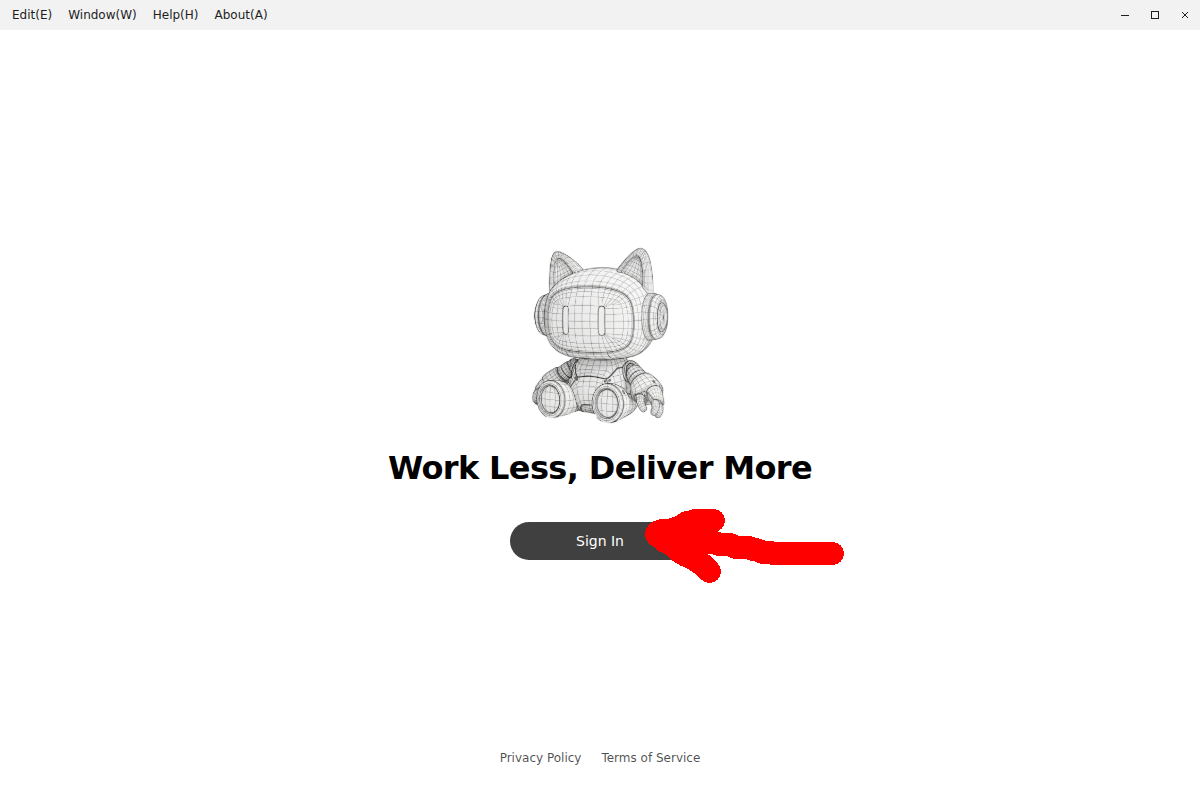
You click "Sign in" in the login screen.
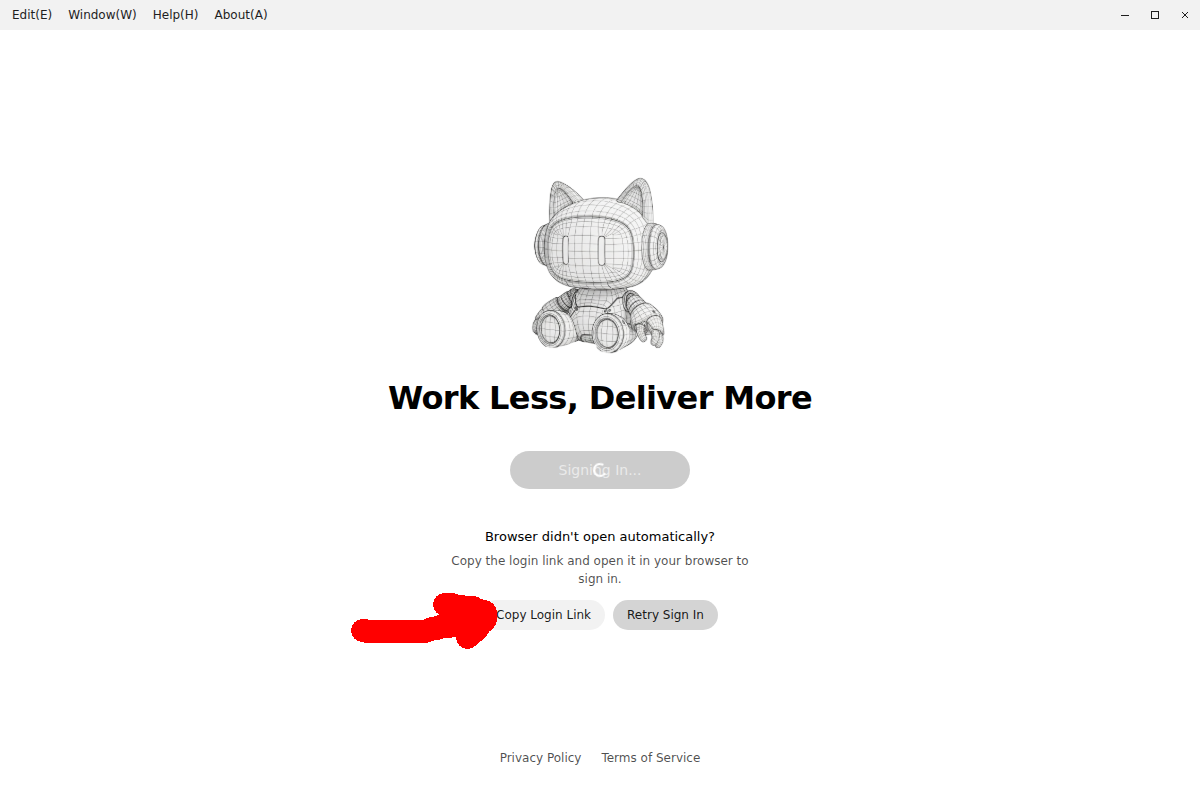
Then you can copy a login link.
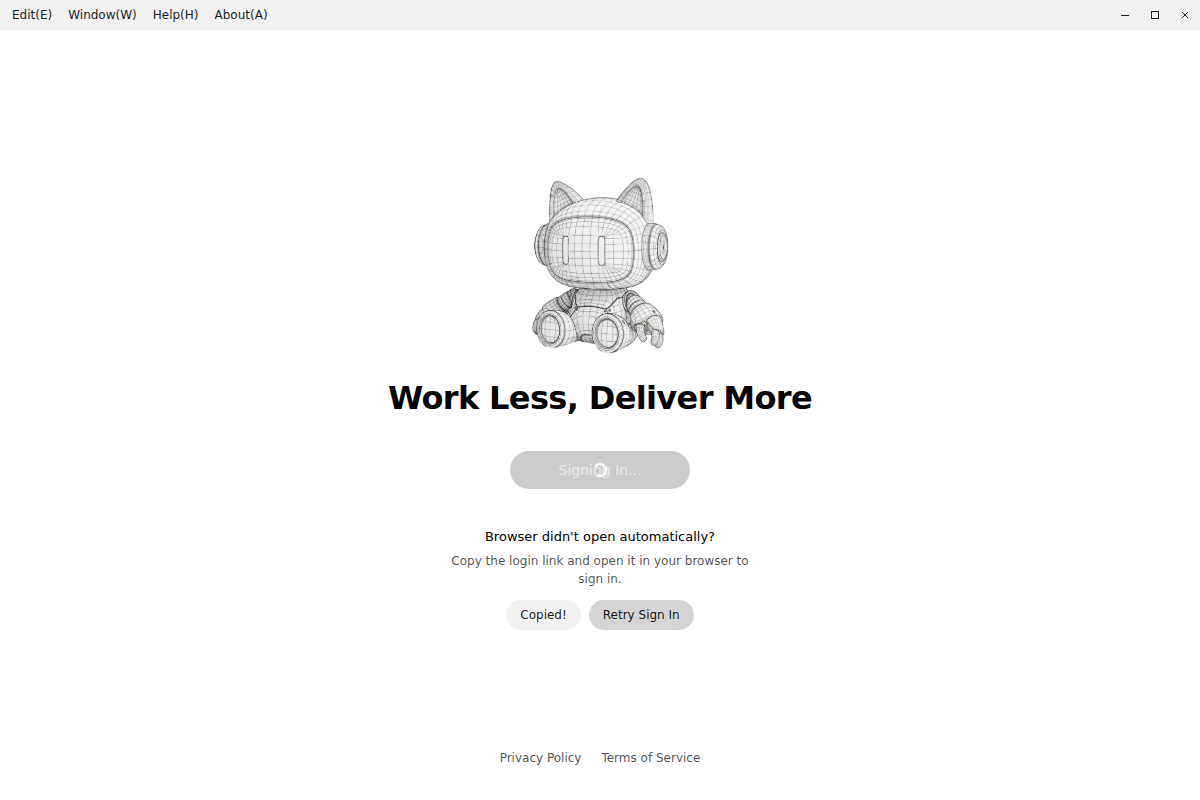
You click "Copy Login Link".
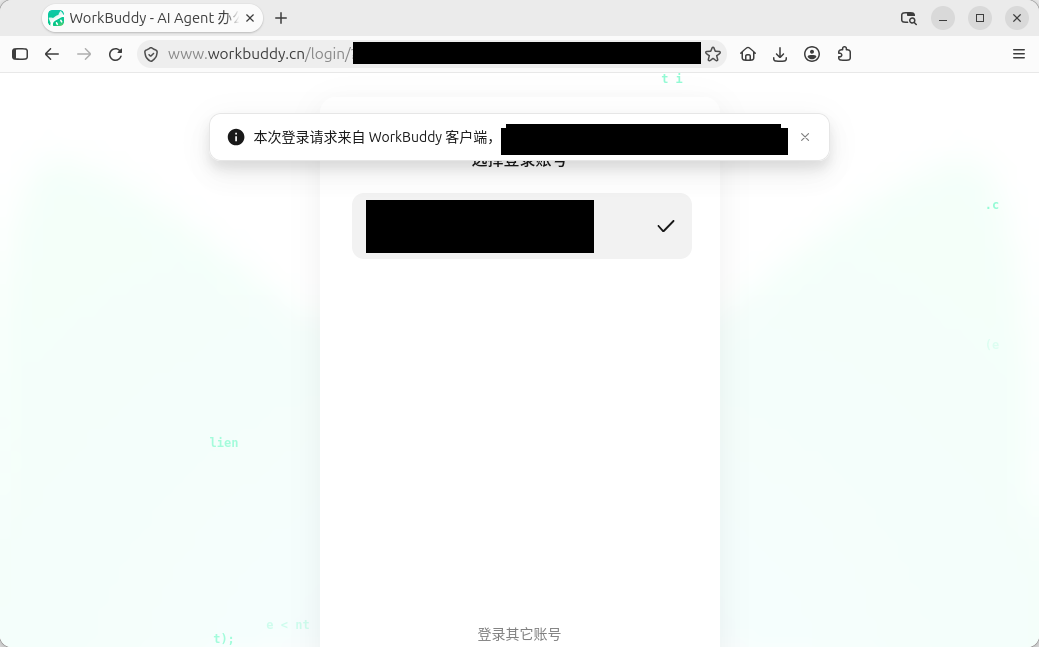
You can paste login link in your browser and follow the instructions.
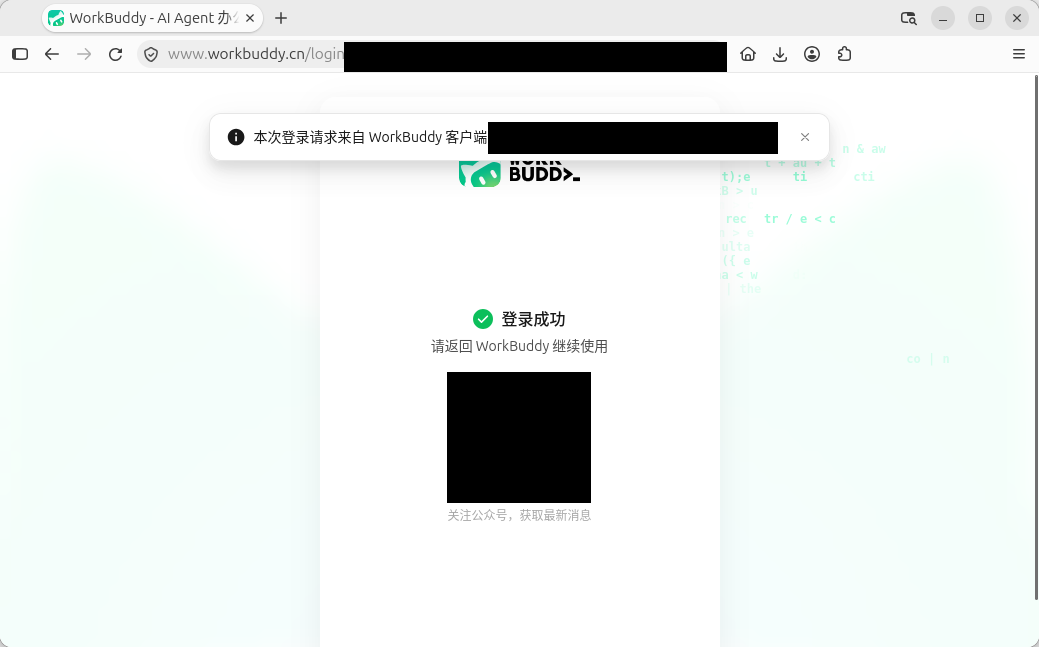
This gets you logged in.
4.2. Using WorkBuddy
Now you can now use WorkBuddy.
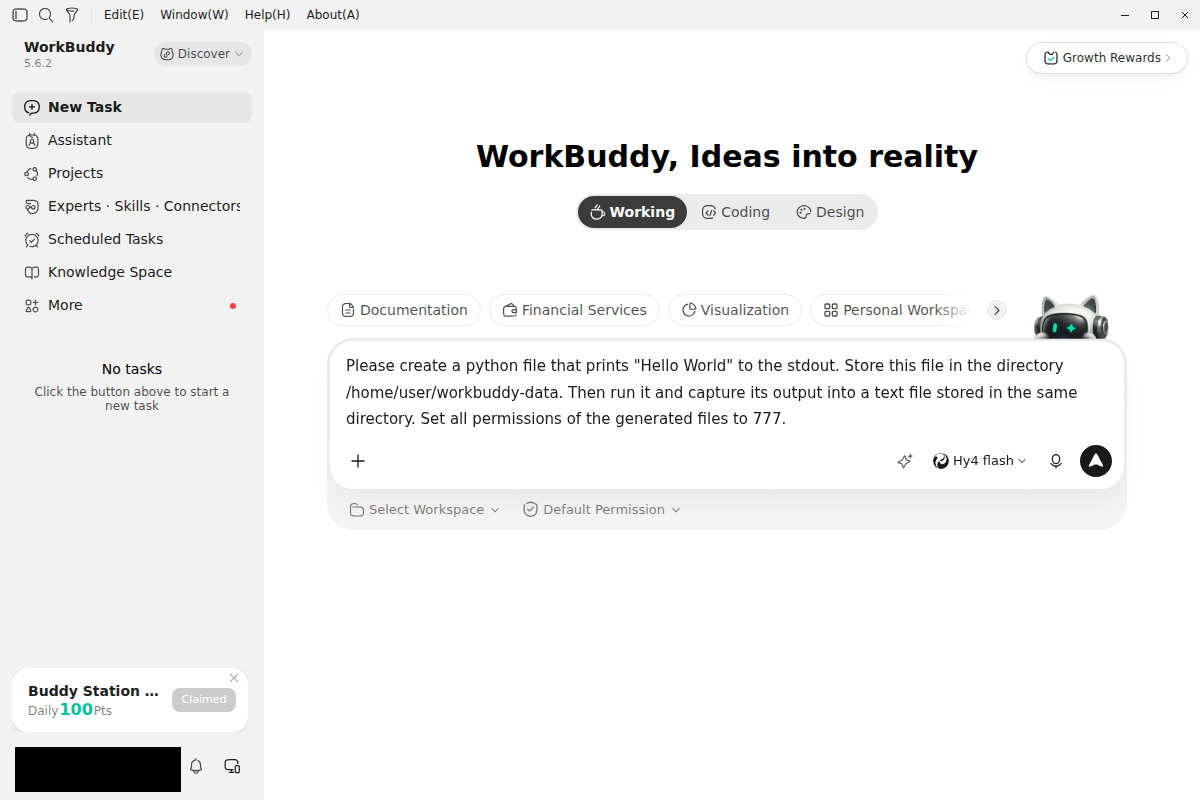
Here I instruct WorkBuddy to create a simple Python file, run it, store its output in the shared folder, and set all permissions to the generated files so that I can edit them.
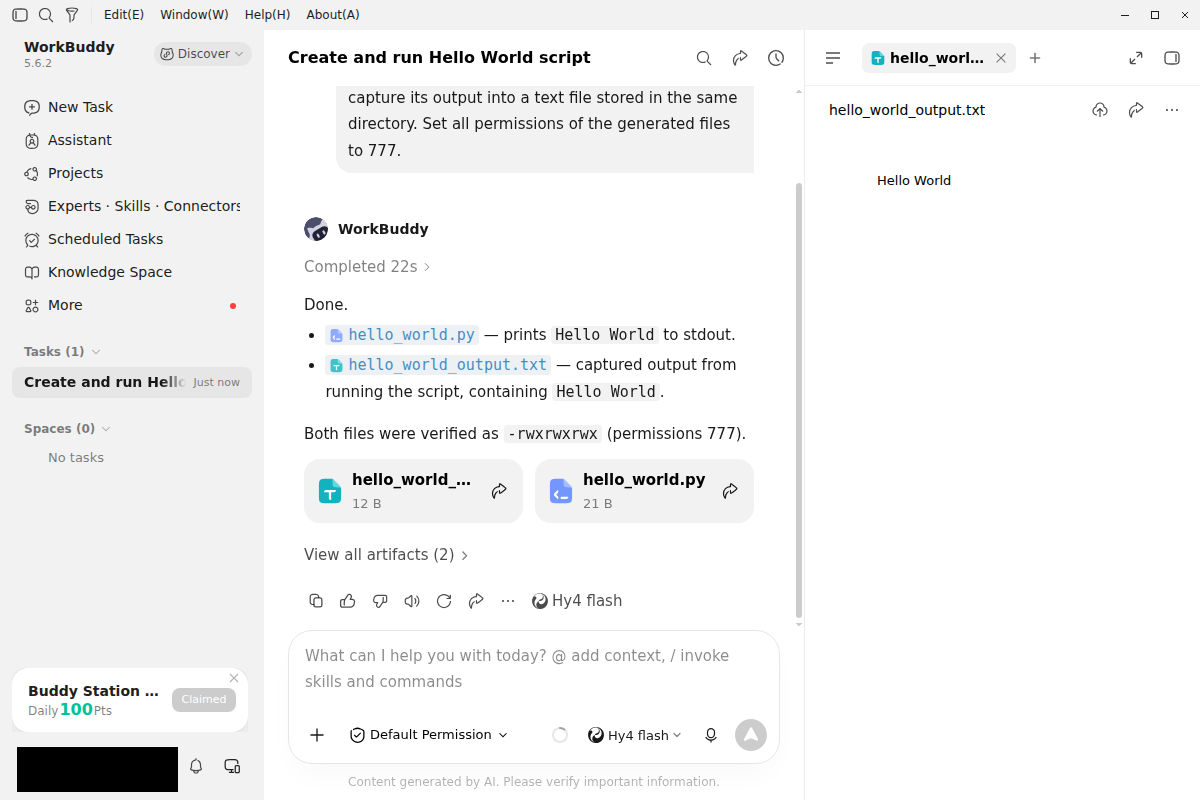
This indeed succeeds.
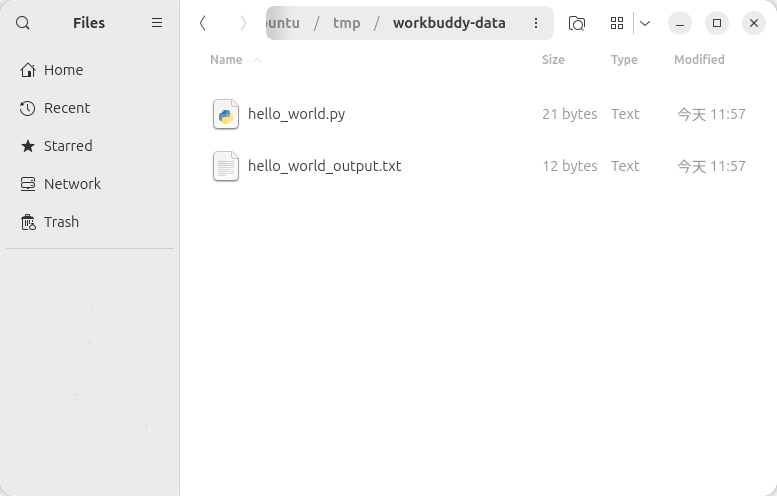
And the files appear indeed in the shared folder.
5. License
Copyright (C) 2026 Thomas Weise (汤卫思教授)
Dr. Thomas Weise (see Contact) holds the copyright of these scripts. The scripts are provided to the public as open source software under the GNU GENERAL PUBLIC LICENSE, Version 3, 29 June 2007.
This license only here applies to the scripts in this package. It obviously does NOT apply to the WorkBuddy software, Docker itself, or anything else contained in the Docker images. These are obviously under the copyright of their copyright holders.
All scripts here are free software: you can redistribute them and/or modify them under the terms of the GNU General Public License as published by the Free Software Foundation, either version 3 of the License, or (at your option) any later version. All scripts and programs here are distributed in the hope that they will be useful, but WITHOUT ANY WARRANTY; without even the implied warranty of MERCHANTABILITY or FITNESS FOR A PARTICULAR PURPOSE. See the GNU General Public License for more details. You should have received a copy of the GNU General Public License along with them. If not, see https://www.gnu.org/licenses/.
If you feel that this repository or image infringes any of your property rights, please contact me.
6. Contact
If you have any questions or suggestions, please contact Prof. Dr. Thomas Weise (汤卫思教授) of the School of Artificial Intelligence and Big Data (人工智能与大数据学院) at Hefei University (合肥大学) in Hefei, Anhui, China (中国安徽省合肥市) via email to tweise@hfuu.edu.cn with CC to tweise@ustc.edu.cn.